



Which pipes are yours, and which are the city's?
Who owns which pipe depends on the line and the city. In Olympia, the property owner is responsible for the side sewer from the building to the cleanout at the property line, and the city from that cleanout to the main; with no cleanout, the owner's share runs all the way to the main. The water meter is city-only. On septic, every pipe, tank and lid is the owner's.
Street to Drainfield · updated · sources listed at the end


Who owns the side sewer in Olympia?
It depends on the cleanout. Olympia's side sewer ownership page defines the side sewer as the pipe from the outer wall or foundation to the public sewer, usually in the street. Where a cleanout exists at the right-of-way line, the city is responsible from the main to the cleanout, including the connection to the main, and the owner from the cleanout to the building, including the cleanout itself.
Cleanouts are owned by the property owner. The city now requires one within one foot of the sidewalk or property line on the private side, but many older homes never got one because it was not required when they were built.
What if there is no cleanout at the property line?
Then more of the line is yours. Olympia says that without a cleanout at the right-of-way line, the owner is responsible for the side sewer from the main all the way to the building, and the city only for the connection to the main. If you add a cleanout to current city standards, the city will accept the stretch from the cleanout to the main once it is shown to be structurally sound, with a post-construction video. Repairs needed in that stretch before acceptance are the owner's.
The official wording is in Olympia Municipal Code 13.08.040B, which the city's page cites.
Who clears a blocked sewer line?
You do, wherever the blockage is. Olympia says the owner is responsible for removing blockages between the building and the main regardless of ownership, and that the city will not remove roots or clogs in a side sewer. The exception is roots in the city-owned sewer that came from trees in the right-of-way. For slow drains, sewer odor or a sinkhole in the yard, the city says to start with a plumber or side sewer contractor. If they find the problem in the city's part, it is up to the owner to show the evidence, and the city then schedules the repair by priority.
Who owns the water meter and the line to the house?
The meter belongs to the utility. Olympia's drinking water page says only city staff are authorized to operate the meter to turn water off or on, and asks owners not to pile dirt, plant, or set pots on the meter box. Shutoffs requested in business hours, and after-hours emergencies, are free; an after-hours non-emergency disconnect or reconnect costs $110. Where to find your own valve is covered in the main water shutoff.
The line from the meter to the house is treated as the customer's in Lacey. Its leak adjustment form covers leaks on the main line that runs from the meter box directly to the house, which the customer has repaired. Lacey describes its cross-connection program as protecting the system from its sources to your meter, and its 2026 water report says the city cannot control plumbing it did not install. Olympia's pages fetched for this article do not spell out ownership of that stretch, so ask the utility before you dig.
Who is responsible for a backflow assembly?
The property owner. Olympia's backflow page says owners must install assemblies wherever a cross-connection could occur, such as irrigation, and have them tested every year by a state-certified tester. Lacey's backflow program adds that confirming the test report reached the city is the owner's job, even when the tester sends it. Details for each city are on city water in Olympia, Lacey and Tumwater.
What about Lacey and Tumwater side sewers, and septic lots?
Each city sets its own side sewer rules, and Lacey's and Tumwater's are not summarized here. Ask Lacey Public Works, or the City of Tumwater through the City of Tumwater's website, before you hire anyone.
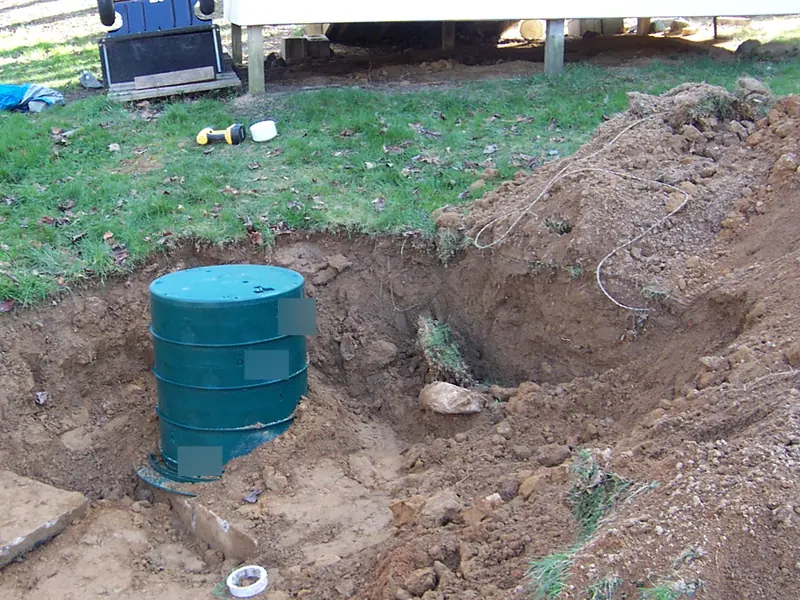
On septic, there is no split. EPA's septic questions page says the system's owner is responsible for operation, maintenance, repair and replacement, and the Department of Health's lid safety page says owners must keep tank lids secure. Olympia counts 4,150 privately owned and maintained septic systems in the city and its growth area, next to 1,800 STEP systems the city owns and maintains. If you are weighing a switch, see switching from septic to sewer.
| Part | Olympia, cleanout at property line | Olympia, no cleanout |
|---|---|---|
| Pipe from house to cleanout | Owner | Owner |
| Cleanout | Owner | Not present |
| Pipe from cleanout or property line to main | City | Owner |
| Connection to the main | City | City |
| Clearing blockages anywhere | Owner | Owner |
Yours to do
- Look for a cleanout lid near the sidewalk and keep it uncovered.
- Keep the water meter box clear of soil, plants and pots.
- Use the house-side shutoff, not the meter.
- Keep records of backflow test reports.
- Keep septic lids secured and never leave one open.
Leave to a licensed or certified pro
- A plumber or side sewer contractor diagnoses blockages and camera-checks the line.
- A licensed contractor registered with the city works in the right-of-way.
- A state-certified backflow assembly tester runs the annual test.
- City crews operate the meter and repair the city-owned section.
On the record
- 1 footWhere Olympia requires a cleanout, from the sidewalk or property lineCity of Olympia
- $110Olympia after-hours non-emergency water shutoff or turn-onCity of Olympia
- 4,150Privately owned septic systems in Olympia and its growth areaCity of Olympia
Common questions
Does Olympia own the STEP tank in my yard?
Olympia says it owns and maintains about 1,800 STEP systems; check the city's sewer lookup map or ask Wastewater Utility staff whether yours is one of them.
Who pays if a city tree's roots break my side sewer?
Olympia may remove roots in the city-owned sewer that came from right-of-way trees. For the private section, the owner is responsible, so ask the city about your case with a plumber's video in hand.
Can I install a cleanout at the property line myself?
Olympia says owners may work on their own property, but the new cleanout must meet city standards, and work in the right-of-way needs a licensed contractor registered with the city.
Who owns the septic tank lids on a rental?
The owner. The Department of Health says septic owners are responsible for safe, secure lids.
Sources
- Side sewer ownership, City of Olympia — cleanout rules, responsibilities, blockages, roots; read 6 November 2026
- Wastewater, City of Olympia — STEP and septic counts; read 6 November 2026
- Drinking Water, City of Olympia — meter access and shutoff charges; read 6 November 2026
- Backflow prevention, City of Olympia — owner duties for assemblies; read 6 November 2026
- Leak Adjustment Request Form, City of Lacey — meter-to-house main line; read 6 November 2026
- Backflow Prevention Program, City of Lacey — program scope and owner duties; read 6 November 2026
- Frequent Questions on Septic Systems, US EPA — septic owner responsibility; read 6 November 2026
- Septic Tank Lid Safety, Washington State Department of Health — owners keep lids secure; read 6 November 2026
How this page was put together. The ownership split here is Olympia's, from its side sewer and drinking water pages read on 6 November 2026, with Lacey's leak form and backflow page, EPA and the Department of Health for septic. Lacey's and Tumwater's side sewer rules could not be confirmed, so they are not stated. City code governs where this summary and the code differ.
 Next at this stopWhere does city water come from here?