



What happens to a drainfield in a wet winter?
A drainfield in a wet winter can run short of room. Thurston County Environmental Health says drainfields treat best in soil that is somewhat dry and full of air for several feet down. When rain, roof runoff or high groundwater fill those spaces, effluent drains slowly, the yard goes soft and drains in the house can back up. Cutting water use and steering runoff away helps limit the strain.
Street to Drainfield · updated · sources listed at the end

Why does a drainfield struggle in a wet winter?
Because the soil is the treatment plant, and wet soil has less air. The county's septic care page explains that effluent trickles out of perforated pipes into gravel and soil, where microbes clean it before it reaches groundwater. Those microbes need oxygen. The same page warns that a system that works well in dry weather may, after heavy rain, sit in soil too saturated for effluent to percolate down.
Water in at the house means effluent out at the field, gallon for gallon. In January that effluent arrives at ground that may already be full.
Where is the extra water coming from?
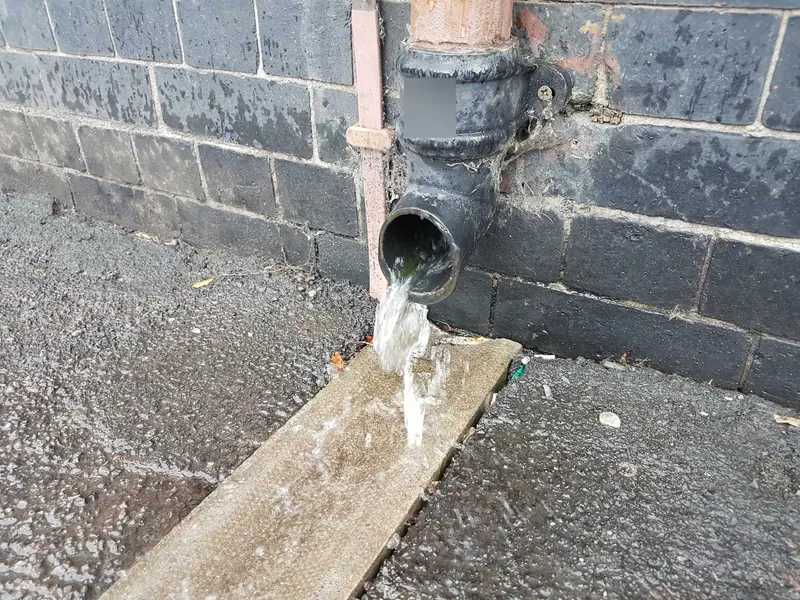
Often from your own roof and paving. The county asks owners to divert water from roofs and drainage ditches, and its septic questions page adds downspouts, driveways and patios to the list. It suggests a small trench uphill of the drainfield to carry surface water around it.
Bigger drainage projects need a check first. If you plan an interceptor, French or curtain drain, or a retaining wall, within 30 feet of any part of the system, the county asks you to talk to Environmental Health before digging. Never cut through the drainfield to lay a drain or line. Indoors, a single running toilet can add up to 200 gallons a day, according to EPA's septic care guide, and every drop of it goes to the field.
What should you do while the drainfield in a wet winter stays soggy?
Lighten the load and stay off the ground. Spread laundry across the week, run only full dishwasher loads, take shorter showers and fix drips. The Department of Health's flood page says to avoid heavy machinery on saturated drainfield soil and not to dig there; the same goes for cars, trailers and livestock, which compact wet ground fast.
Keep children and pets off any wet patch that smells of sewage. If you are unsure whether you are looking at rain or effluent, read signs of a failing drainfield before you decide to wait it out.
What if floodwater covers the drainfield?
Stop using the system until the water goes down. The county says that if your drainfield is under water, do not use the system until the water has receded, and if silt or debris has washed into the tank, have it pumped as soon as the ground allows. Its flood list also covers cutting power to a septic pump and having electrical connections checked for damage before the power goes back on. Never touch switches, panels or pump controls while you or they are wet.
Wait to open anything. The county says to hold off opening the tank until the water has receded and the area is no longer saturated. When it is time, a county-certified pumper or monitoring specialist opens the lids and looks inside; nobody enters the tank, and an open lid is never left unattended. After the soil dries, the Department of Health says to have the whole system evaluated, and any damage repaired, by a licensed on-site sewage professional. Pump systems have their own warning signs, covered in when the septic alarm goes off.
When is a soggy yard a sign of failure rather than weather?
When it stays wet in dry spells. EPA's malfunctions page calls soft, wet or spongy soil around a drainfield, especially without significant rain, a good indication of system failure. Bright green, lush grass over the lines in a dry August points the same way.
There is some good news in the Department of Health's signs-of-failure page: a drainfield that is only waterlogged, from heavy use or floodwater, can sometimes be dried out and brought back. A service professional has to make that call.
Why does the county study winter water on new systems?
Because high groundwater decides what can be built. The county's permits page offers a Winter Water Study application, and the 2026 fee schedule, in effect from 1 January 2026, prices a single study at $1,510 plus $275 an hour beyond five hours. If your lot sits low, ask the county what the record drawing and any past study say before you plan an addition or a repair. You can request records through the county's septic files.
Yours to do
- Cut water use and spread laundry over the week while the ground is saturated.
- Turn downspouts and driveway runoff away from the drainfield.
- Keep vehicles, trailers and livestock off the field all winter.
- Fix running toilets and dripping taps.
- Note where water stands and for how long, to share with a professional.
Leave to a licensed or certified pro
- A county-certified pumper or monitoring specialist opens and checks the tank after a flood.
- A licensed on-site sewage professional evaluates and repairs flood damage.
- Drains or retaining walls within 30 feet of the system get a county check first.
- Pump power and electrical connections after flooding are checked by a qualified electrician or septic pro.
On the record
- 30 feetDistance for drains or walls that need a county check firstThurston County septic FAQ
- 200 gallonsDaily extra water from one leaky or running toiletUS EPA
- $1,510County Winter Water Study fee, 2026 scheduleThurston County Environmental Health
Common questions
Should I pump the tank to relieve a waterlogged drainfield?
Not as a cure. Pumping removes solids, or silt after a flood, but the county warns that a failed drainfield cannot be rescued by emptying the tank.
Can I cover the drainfield with a tarp to keep rain off?
No. The county says not to use landscaping plastic over a drainfield because the soil needs air to work.
Is it safe to flush toilets during a flood?
The Department of Health says not to use the septic system during a flood. Plan on other facilities until the water is gone and the field has been checked.
Why does my drainfield only act up from November to March?
Saturated soil in the rainy months leaves less room for effluent. If problems show up in summer too, treat that as a failure warning and call a professional.
Who checks a pump system after the power was cut for flooding?
A county-certified septic professional, together with an electrician where wiring got wet. Follow the county's note that electrical connections must be checked for damage before the system is turned back on.
Sources
- Care & Maintenance of Your Septic System, Thurston County — how drainfields treat effluent, runoff diversion, flood steps, wait to open the tank; read 6 November 2026
- Septic Frequently Asked Questions, Thurston County — downspouts, uphill trench, 30-foot drain and wall check; read 6 November 2026
- Septic Systems Permits & Resources, Thurston County — Winter Water Study application; read 6 November 2026
- Environmental Health 2026 Fee Schedule, Thurston County — Winter Water Study fee; read 6 November 2026
- Floods and Septic Systems, Washington State Department of Health — use, digging and machinery during floods; licensed evaluation after; read 6 November 2026
- Signs of Septic System Failure, Washington State Department of Health — saturated drainfields that can be dried out; read 6 November 2026
- Resolving Septic System Malfunctions, US EPA — wet soil without rain as a failure sign; read 6 November 2026
- How to Care for Your Septic System, US EPA — running toilet volume; read 6 November 2026
How this page was put together. Sources here are Thurston County Environmental Health's septic care, questions, permit and 2026 fee pages, the Washington State Department of Health's flood and failure pages, and EPA's septic pages, all read on 6 November 2026. It gives no rainfall or groundwater statistics, because none of those pages publish them for individual lots, and it leaves tank inspection steps to certified professionals.
 Next at this stopHow can you tell a drainfield is failing? AI picture