



What to do when the septic alarm goes off
A septic alarm going off means liquid in the pump chamber has risen above the level where the pump should have started, Thurston County's pump-system brochures explain. Stop using water at once: no showers, baths or laundry. Press the light on the alarm panel to silence the buzzer, then call a county-certified septic professional. Never open or enter the pump chamber; its gases are poisonous and can kill.
Street to Drainfield · updated · sources listed at the end


What is the alarm telling you?
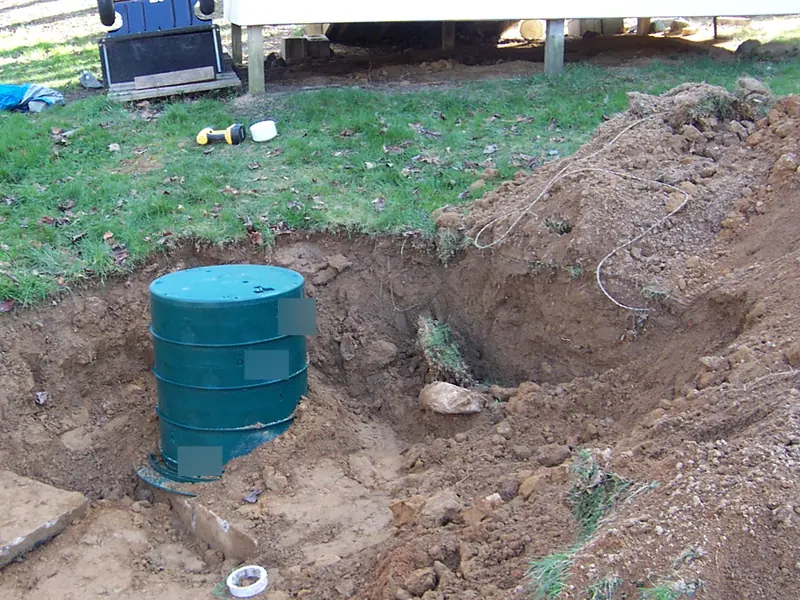
The buzzer and light come from a float inside the pump chamber, the tank after the septic tank that doses liquid out to a pressure drainfield, mound or sand filter. Thurston County's pressure distribution brochure says that float is set above the pump's "on" float, so it rises only when the pump has not kept up. Causes it lists include a faulty pump, float or circuit, too much water use, "or other reasons." On systems run by a timer, the county's mound brochure adds, the alarm can also mean the house is sending more water than the system is set to dose.
What should you do in the first hour?
Cut water use to the minimum and get help on the way. The county says to avoid baths, showers and clothes washing, because the chamber's reserve storage should give enough time to have the problem fixed. Press the reset light on the panel to quiet the buzzer. Write down the time it started, then call a county-certified pumper or monitoring specialist from the county's list of septic professionals. Keep children and pets away from the tank lids while you wait.
Is there anything to check before the service call?
One quick look is reasonable: the electrical panel. The county lists a tripped breaker or blown fuse as a common cause and says the pump should have its own circuit. If a breaker has tripped and it trips again after one reset, leave it off and tell the professional. Everything else on the county's checklist, from plugs and tangled floats to debris on the float cables, sits inside or at the chamber, so leave it to the pro. The county's caution is direct: do not enter the pump chamber, because the gases are poisonous and the lack of air can be fatal.
How long can the house wait after a septic alarm?
Not long, and the county gives no set number of hours. Reserve storage is meant to cover the gap until service arrives, but if it fills, the brochure warns, sewage can back up into the home. Keep water use near zero until the pump is running again. If sewage does reach a floor drain or toilet, stay out of contact with it; EPA's malfunctions page says to call the local health department for guidance.
What changes during a power outage?
A gravity system keeps working without power, but a pump system does not. Thurston County's care page says a septic tank holds about one day's supply of waste, so use as little water as possible while the lights are out. Don't guess at the control panel when power returns: ask your septic professional how to restart the system after a long outage, ideally before you need it, and leave any repair of pumps or electrical parts to them.
Which Thurston County systems have alarms?
The county's brochures describe a high-water alarm float in the pump chamber of pressure distribution and mound systems, and the county requires audible and visual alarms on UV disinfection units in Article IV of its Sanitary Code. Those systems are inspected every year under that code, and many hold an Operational Certificate. The county brochures advise checking the pump chamber, pump and floats every year and pressing any "push-to-test" button on the panel regularly. Learn what the yearly visit covers in septic inspection rules for Thurston County.
Yours to do
- Stop showers, baths, laundry and dishwasher loads.
- Press the alarm light to silence the buzzer.
- Check the breaker panel once for a tripped pump circuit.
- Keep everyone away from the tank and chamber lids.
Leave to a licensed or certified pro
- Opening the pump chamber and checking floats and cords.
- Testing or replacing the pump and controls.
- Any electrical repair at the panel or chamber.
- Pumping the chamber if it has filled.
On the record
- 1 dayWaste a septic tank holds once the pump stopsThurston County Environmental Health
- Separate circuitWhere the alarm should be wired, apart from the pumpThurston County pressure distribution brochure
- 10 to 20 yearsTypical service life of many pumps and controlsUS EPA
Common questions
Why did the alarm stop by itself?
The level may have dropped after water use fell or the pump caught up. The county still treats an alarm as a sign of a problem, so have the system checked.
Should the alarm share a circuit with the pump?
No. The county's brochures say the alarm should be on an electrical circuit separate from the pump, so it can still sound if the pump circuit fails.
Can heavy rain set off the alarm?
The county's care page says a rain-soaked drainfield can stop accepting effluent and that you should cut water use during heavy rain. Water use is one cause the county names, so call a pro if it sounds.
How old are pumps when they fail?
EPA says many pumps and controls need replacing every 10 to 20 years; your inspection reports show how old yours is.
Is the alarm worth testing on a quiet day?
Yes. The county advises pressing the panel's push-to-test button regularly, if it has one, so you know the buzzer works.
Sources
- Pressure Distribution Systems brochure, Thurston County — alarm float, causes, silencing, breaker check, never enter the chamber, separate alarm circuit; read 6 November 2026
- Mound System brochure, Thurston County — alarm on timer-controlled systems, yearly checks; read 6 November 2026
- Care & Maintenance of Your Septic System, Thurston County — one-day storage, outages, pump chamber gases, heavy rain; read 6 November 2026
- Thurston County Sanitary Code, Article IV - Sewage Disposal — yearly inspections, alarms on UV units; read 6 November 2026
- Hiring a Septic Professional, Thurston County — certified pumpers and monitoring specialists; read 6 November 2026
- Resolving Septic System Malfunctions, US EPA — sewage backup guidance; read 6 November 2026
- Frequent Questions on Septic Systems, US EPA — pump and control service life; read 6 November 2026
How this page was put together. The steps here follow Thurston County's pressure distribution and mound brochures, its care and maintenance page and Sanitary Code Article IV, plus two EPA pages, all read on 6 November 2026. The county brochures also describe cleaning floats and checking plugs at the chamber; this page leaves those to a professional, and it gives no time limit for waiting because the county sets none.
 Next at this stopHow do you find your septic records? AI picture