



Where are the septic tank lids?
Septic tank lids usually sit near the house. Thurston County says the tank is usually within 10 feet of the foundation, along the line of the sewer pipe. Start with the county record drawing for your parcel. Once you find the lids, keep them closed and fastened. Lifting one is a job for a county-certified septic professional, never a solo task: a fall or tank gases can kill.
Street to Drainfield · updated · sources listed at the end

What does the county record drawing show?
A record drawing is the county's map of your system. Thurston County used to call it an "as-built," and its care and maintenance page says a newer one shows the tank, the drainfield, the replacement area and parts such as a pump chamber or mound, often with the tank size. Drawings from before 1980 may be a very rough sketch. Request yours from the Building Development Center with the eleven-digit tax parcel number printed on your tax statement; finding septic records in Thurston County walks through the online lookup.
How do you trace the tank when there is no drawing?
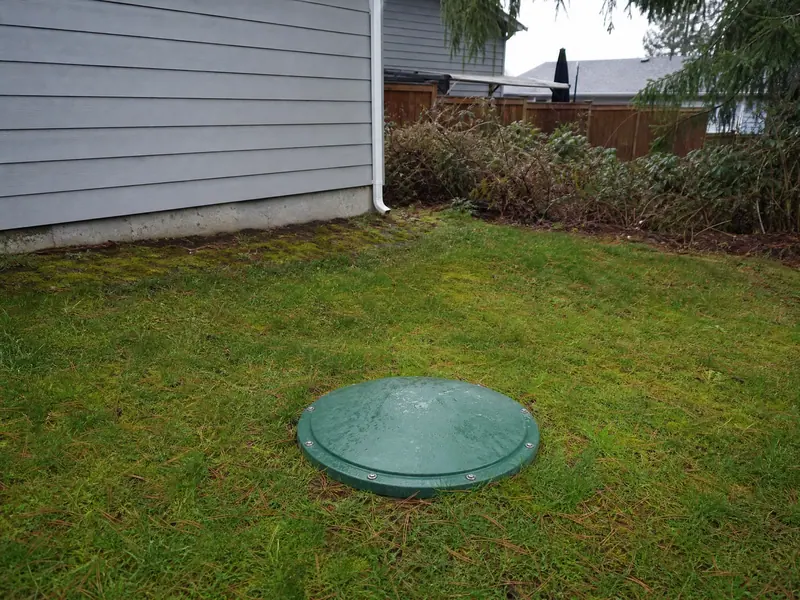
Follow the sewer pipe. The county suggests going under the house to see where the pipe leaves the foundation, then looking within about 10 feet of that spot. EPA's septic questions page gives the same distance and says an access riser often shows as a black or green disc. The county also allows careful probing with a thin metal rod along the pipe's path, and warns against heavy steel wrecking bars that can crack a tank top.
Why are some septic tank lids buried?
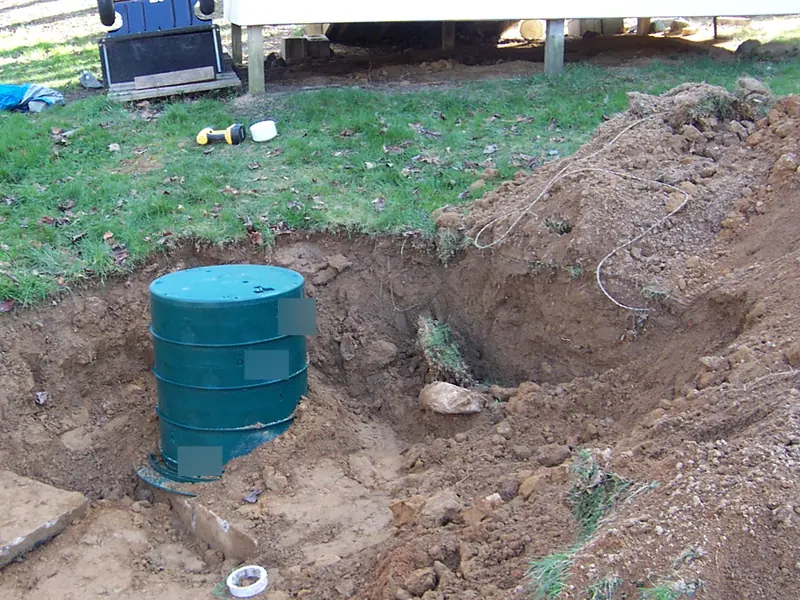
Older tanks were often set with their lids underground, and the Department of Health notes that many systems are completely buried with nothing showing at the surface. A riser is a short tube that brings the opening up to grade, so the next pump-out needs little or no digging. Thurston County offers a rebate of up to $200 toward risers and secondary safety devices over the manholes of existing systems, as its homeowner requirements page read on 6 November 2026.
What makes a septic tank lid safe?
A safe lid is intact, fastened and hard for a child to move. DOH says people do fall into septic tanks, and it lists the habits that prevent it: know where every lid is, check them for damage, replace broken or missing parts, and secure them with bolts, screws or other locks. Never park or drive over a tank, because the weight can dislodge a cover. Teach children that lids are not for playing on or opening.
Who should lift septic tank lids?
Leave the lifting to a county-certified pumper or monitoring specialist. Thurston County's care page states it plainly: never enter a septic tank, because the fumes can be fatal, and never leave an open tank unattended. Do not open a lid alone, do not lean in, and keep children and pets well back while the crew works. When the job ends, check that every lid is back on and fastened before anyone walks away.
Marking the spot for next time
Once a pro has found the tank, record it. Measure from two fixed corners of the house to each lid and write the numbers on your copy of the record drawing. The county's hiring guidance suggests asking whether a contractor charges extra to dig up lids, so a marked spot can save a visit. Keep the sketch with your septic tank papers.
Yours to do
- Request the record drawing with your tax parcel number.
- Look under the house for where the sewer pipe exits.
- Check visible lids for cracks and missing bolts without lifting them.
- Keep cars, trailers and play equipment off the tank area.
Leave to a licensed or certified pro
- Lifting, opening or resetting any tank or riser lid.
- Locating a deeply buried tank with probes or electronic locators.
- Installing risers and secure, lockable covers.
- Replacing a cracked lid or tank top.
On the record
- 10 feetUsual distance from the foundation to the septic tankThurston County Environmental Health
- $200Most the county rebate pays toward risers and safety devicesThurston County Environmental Health
- 11 digitsLength of the tax parcel number the county asks forThurston County septic FAQ
- 1980Record drawings older than this may be rough sketchesThurston County Environmental Health
Common questions
Can a tank have more than one lid?
Yes. Many tanks have two compartments, and the county's care page describes separate lids over the inlet, outlet and crossover baffles. A pumper should open and pump each compartment; DOH suggests asking whether they pump both sides.
Is it safe to stand on a plastic riser lid?
Treat it as a hazard, not a step. DOH warns that lids can be damaged or dislodged and asks owners to inspect them and fix damaged parts, so keep children from playing on any lid.
What if a lid is cracked or loose?
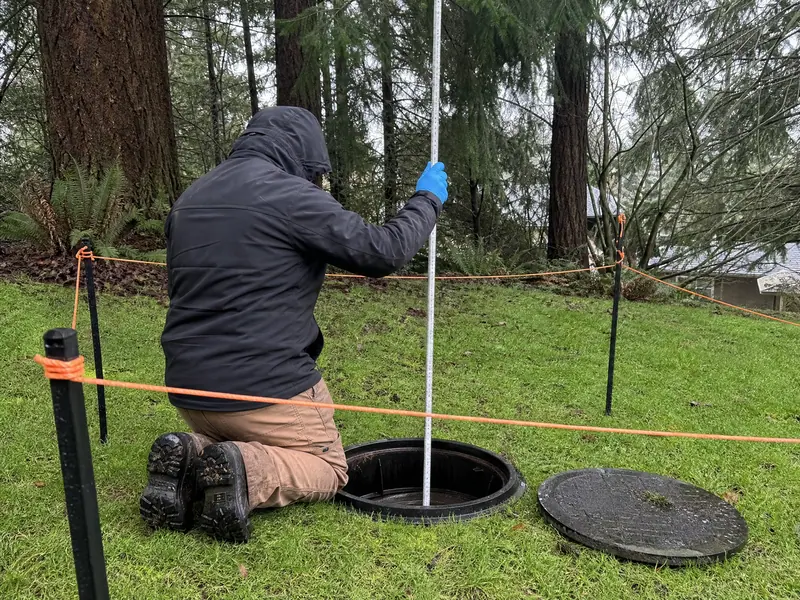
Rope the area off so nobody walks on it, then call a county-certified pumper or installer to replace or secure it. DOH puts that duty on the owner: a septic owner is responsible for a secure lid on every tank.
Can I dig down to a buried lid before the pumper arrives?
Ask the contractor first; the county and DOH both suggest asking what they charge to dig and whether you may do it. If you do uncover soil, stop at the lid's surface and leave lifting it to the crew.
Do lids have to be at ground level?
None of the county pages cited here say so, but risers that bring lids to grade make pumping easier, and the county rebate helps pay for them.
Sources
- Care & Maintenance of Your Septic System, Thurston County — record drawings, 10-foot distance, probing, never enter or leave a tank open; read 6 November 2026
- Septic system FAQ, Thurston County — eleven-digit parcel number, probing with a rod; read 6 November 2026
- Homeowner Maintenance & Requirements, Thurston County — $200 riser and safety-device rebate; read 6 November 2026
- Hiring a Septic Professional, Thurston County — questions about digging up lids; read 6 November 2026
- Septic Tank Lid Safety, Washington State Department of Health — falls into tanks, fastening lids, buried systems; read 6 November 2026
- Hiring a Septic System Professional, Washington State Department of Health — pumping both compartments; read 6 November 2026
- Frequent Questions on Septic Systems, US EPA — riser appearance, tank distance from the building; read 6 November 2026
How this page was put together. Sources for this page: Thurston County Environmental Health's septic pages, the Washington State Department of Health's lid-safety and hiring pages, and EPA's septic questions page, each checked on 6 November 2026. No steps are given here for opening a lid or looking into a tank, and no prices appear because the county publishes none for locating or riser work.
 Next at this stopHow often does Thurston County require a septic inspection? AI picture