



How often should a septic tank be pumped?
How often to pump a septic tank depends on what the inspector measures, not on the calendar alone. Thurston County says to pump when scum and sludge together reach one-third of the tank's working depth, and that most tanks get there every 3 to 5 years. Its example: a 1,150-gallon tank serving a family of four, with little garbage disposal use, needs pumping about every 3 years.
Street to Drainfield · updated · sources listed at the end
What measurement decides when a tank gets pumped?
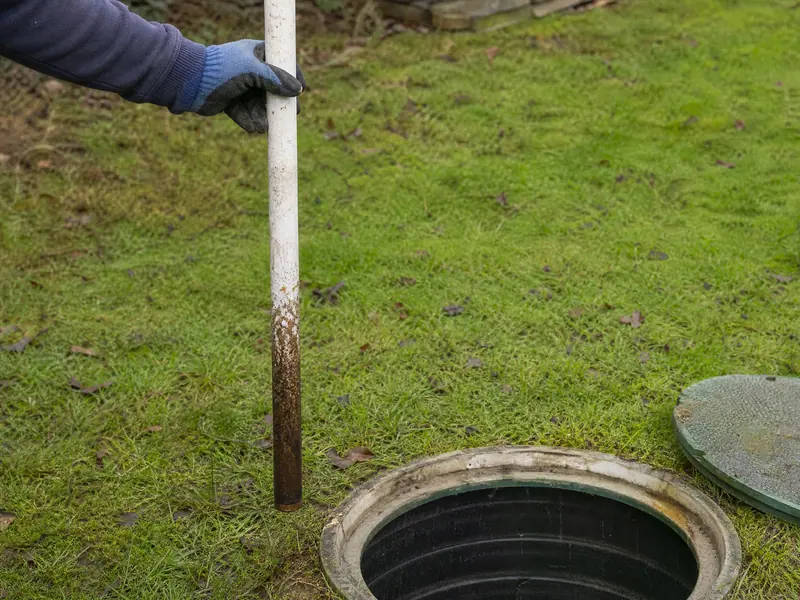
Thickness of the two layers decides it. Solids sink as sludge, grease floats as scum, and the clear liquid between them flows on to the drainfield. Thurston County's septic FAQ sets the trigger at scum plus sludge equal to one-third of the working depth. EPA's care page uses a tighter test: pump if sludge and scum exceed 25 percent of the liquid depth, if the scum bottom is within six inches of the outlet, or if the sludge top is within 12 inches of it. When the two differ, follow the county, because it enforces the rule here.
Why does one house pump at three years and another at five?
Four things set the pace, according to the Department of Health: how many people live in the house, how much water goes down the drains, how many solids ride along with it, and the size of the tank. A garbage disposal adds food solids that the county says have a dramatic effect on pumping frequency. DOH also notes that an older tank may be too small for a house that has been remodeled and enlarged, and that dumping RV or boat waste fills a tank faster.
Who measures the scum and sludge?
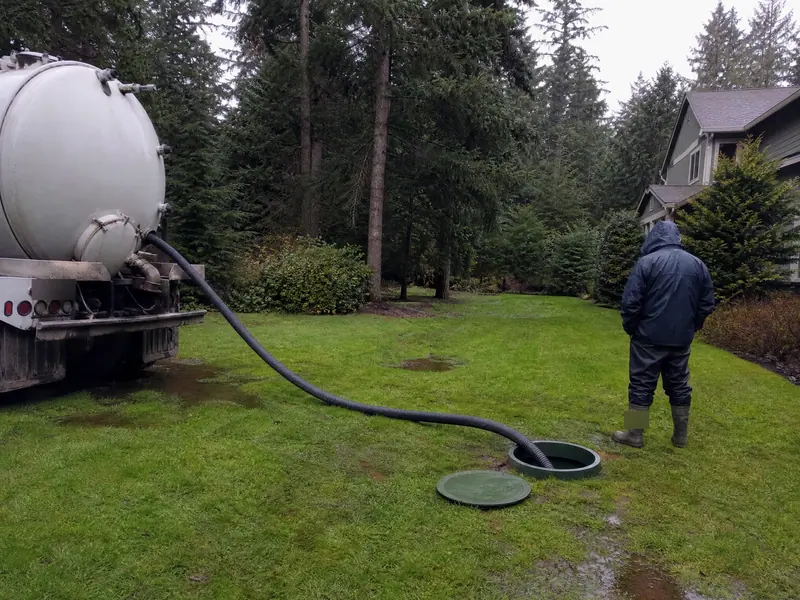
A county-certified pumper or monitoring specialist measures them during the routine inspection. The county's care and maintenance page warns never to enter a septic tank, because the fumes can be fatal, and never to leave an open tank unattended. The county does certify some owners as self-inspectors through its own course. This site's advice is simpler: leave opening lids and measuring to a county-certified pumper or monitoring specialist, never open a lid alone, and never leave an open tank where children or pets can reach it.
Does pumping count as an inspection?
No. Thurston County's hiring page says having tanks pumped is not a substitute for an inspection, and that the inspection should decide whether pumping is needed. The county's maintenance requirements say the same from the other side: a tank must be pumped only when its layers are thick enough. Book both on the schedule in septic inspection rules for Thurston County.
What does a pump-out cost here?
The county publishes no price. Its FAQ says pumping costs vary, advises getting estimates from several pumpers, and suggests asking how many gallons each estimate covers. Ask too whether digging up buried lids costs extra, and whether every compartment will be pumped. The fixed public charge is the filing fee: the county's 2026 fee schedule lists $20 for each pumping report filed online. The county also lists a homeowner grant of up to $2,000, with income limits, that can cover pumping; eligibility details differ between county pages, so ask the county and see septic repair loans and help.
Late pumping and the drainfield
Waiting too long moves the problem downhill. When sludge and scum build up near the outlet, solids can wash into the drainfield and clog it, which the county calls the most expensive repair. Its care page is blunt: pumping cannot rescue a drainfield that has already failed, and the replacement goes in a different spot. Read the warning signs on signs of a failing drainfield.
Yours to do
- Keep every pumping and inspection report in one folder.
- Note the date and the layer readings the pumper gives you.
- Spread laundry through the week and fix running toilets.
- Get several written estimates that state the gallons pumped.
Leave to a licensed or certified pro
- Opening tanks and measuring scum and sludge.
- Pumping every compartment and pump chamber.
- Checking baffles and the outlet filter while the tank is empty.
- Filing the pumping report with the county.
On the record
- 1/3Scum plus sludge share of working depth that triggers pumpingThurston County septic FAQ
- 3 to 5 yearsUsual pumping range for most tanksThurston County Environmental Health
- 1,150 gallonsCounty example tank needing pumping about every 3 yearsThurston County septic FAQ
- 1 to 3 yearsHow often to check buildup until a pattern is clearThurston County Environmental Health
- $20County fee per pumping report filed online, 2026Thurston County fee schedule
Common questions
Is it a problem if a tank has never been pumped?
It can be. EPA says a tank that never seems to need pumping may be leaking into the ground, or may be full of solids slowly moving toward the drainfield. Have it inspected.
Should a vacation cabin be pumped less often?
Light use adds fewer solids, but the county notes that a rarely used system may not keep enough bacteria alive. Let the inspector's readings set the schedule rather than guessing.
Do septic additives stretch the time between pump-outs?
No. DOH says store-bought additives do not reduce or eliminate the need for routine pumping, and the county says they have not been tested to show they work.
Will a new baby or holiday guests change the schedule?
The county lists both as added stress and suggests reducing water load and having the system inspected more often during heavy use.
Does Washington law say who removes the septage?
Yes. WAC 246-272A-0270 requires owners to use an approved pumper when solids and scum show removal is needed.
Sources
- Septic system FAQ, Thurston County — one-third rule, 1,150-gallon example, estimates, garbage disposals; read 6 November 2026
- Care & Maintenance of Your Septic System, Thurston County — 3-to-5-year range, 1-to-3-year checks, never enter or leave a tank open, failed drainfields; read 6 November 2026
- Hiring a Septic Professional, Thurston County — pumping is not an inspection; read 6 November 2026
- Homeowner Maintenance & Requirements, Thurston County — pump only when layers are thick enough; read 6 November 2026
- Environmental Health 2026 Fee Schedule, Thurston County — $20 online pumping report fee; read 6 November 2026
- Caring for Your Septic System, Washington State Department of Health — four pumping factors, additives; read 6 November 2026
- How to Care for Your Septic System, US EPA — 25 percent, six-inch and 12-inch pumping tests; read 6 November 2026
- Frequent Questions on Septic Systems, US EPA — tanks that are never pumped; read 6 November 2026
- WAC 246-272A-0270, Washington State Legislature — approved pumper requirement; read 6 November 2026
How this page was put together. The intervals and the measurement rule here come from Thurston County Environmental Health's septic pages and fee schedule, the Washington State Department of Health, EPA and the state rule WAC 246-272A-0270, all read on 6 November 2026. The page gives no pumping price because the county publishes none, and it does not reproduce the county's do-it-yourself measuring steps, which involve opening a tank.
 Next at this stopWhat should never go down a septic drain?