



What's causing the stains in your sinks?
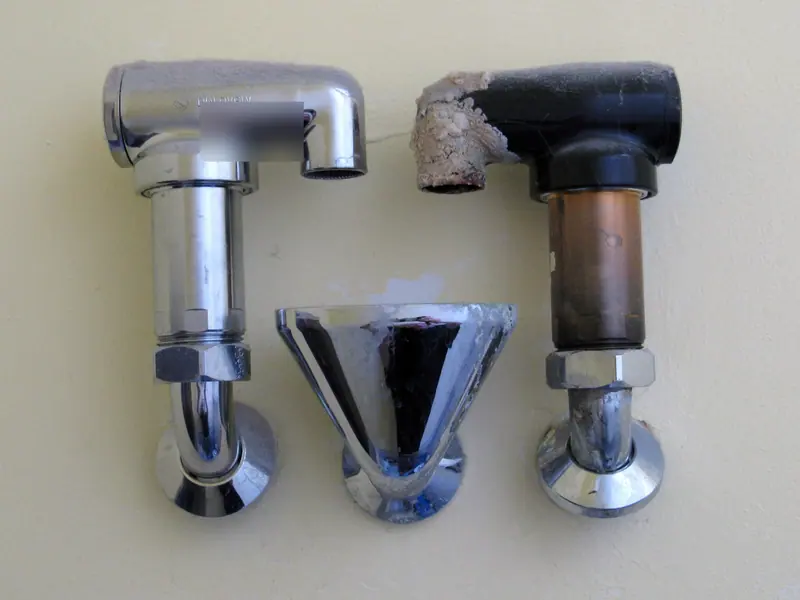
Hard water and iron leave different marks. Orange or reddish stains usually mean iron, black or dark brown stains point to manganese, and white scale that stops soap lathering means hardness. DOH says iron is not a health concern, but the EPA's guide levels for staining are low: 0.3 mg/L for iron, 0.05 mg/L for manganese. Test at a lab first, then choose and size treatment to the result.
Street to Drainfield · updated · sources listed at the end

Is hard water or iron common in Thurston County wells?
Iron and manganese can run high; hardness mostly does not. The most detailed published picture is a 1998 USGS report on northern Thurston County groundwater. It found 94 percent of samples soft or moderately hard, and said most water-quality problems were natural, with iron as high as 21,000 micrograms per liter and manganese as high as 3,400 micrograms per liter in some wells. That report is old and covers the north county only, and no newer county-wide figure turned up in county or state pages on 6 November 2026. Your own well can differ a lot from the neighbor's, so your lab report is the number that counts.
How can you tell iron, manganese and hardness apart?
Look at the color, then confirm with a test. DOH's color, taste and odor guide and the EPA's well checklist line up like this:
- Brown, red, orange or yellow water or stains: usually iron. Old galvanized or cast iron pipe can cause it too.
- Black or dark brown water or stains: often manganese or pipe sediment.
- Scaly residue and soap that won't lather: hardness, from calcium and magnesium.
- Blue-green stains: copper pipe corrosion, a different problem, often tied to low pH.
A sudden color change is different from a slow stain. DOH says a sudden change in water color could signal a public health concern, so call Thurston County Environmental Health and test for bacteria too.
What levels does the EPA set for iron and manganese?
They are guide levels for looks and taste, not health limits. The EPA's secondary standards page lists iron at 0.3 mg/L, with rusty color, sediment, metallic taste and reddish or orange staining above it; manganese at 0.05 mg/L, with black to brown color and black staining; and pH between 6.5 and 8.5. EPA does not set a hardness number. These secondary standards are not enforced on a private well; they tell you when stains and tastes are likely.
What should you test for before buying treatment?
Iron, manganese, hardness and pH, plus the yearly bacteria and nitrate tests. The EPA's well checklist says stained fixtures and laundry call for iron, copper and manganese tests; scale and poor lather call for hardness; and if a water softener is planned, test manganese and iron first. Use an accredited lab through Ecology's Lab Search for numbers you can size equipment to. A home kit can screen, but the private well testing page explains why the lab report matters.
Which treatments deal with iron and hardness?
The CDC's home water treatment page says water softeners remove calcium and magnesium, and some may also remove iron and manganese, so check the product label for what it removes. No one system fixes everything, and each product's label says what it treats, which is why the lab numbers come first and the equipment second. Have treatment plumbed in by a qualified installer, with a permit where L&I or the county requires one. Softener regeneration water goes down the drain, so if you are on septic, read what not to flush with a septic tank.
Is iron in well water a health risk?
DOH says iron in drinking water is not a human health concern, though it can ruin laundry and fixtures. Manganese is different: DOH points owners with black or dark water toward a licensed plumber and the local health agency. Rusty water from inside a pressure tank can also mean the tank is corroding; see well pump and pressure tank.
Yours to do
- Note the stain colors and where they show: one tap, hot water only, or every fixture.
- Order a lab test for iron, manganese, hardness and pH.
- Screen with a home kit between lab tests if you like.
- Keep lab reports with the treatment manuals.
Leave to a licensed or certified pro
- Installing iron filters, softeners or other treatment by a qualified installer, sized to the lab result.
- Replacing corroded galvanized pipe by a licensed plumber.
- Pressure tank replacement by a licensed pump installer.
- Any wiring for treatment equipment by a licensed electrician.
On the record
| What you see | Likely cause | Test to order |
|---|---|---|
| Orange or reddish stains, metallic taste | Iron | Iron, pH |
| Black or brown stains | Manganese | Manganese, iron |
| White scale, poor lather | Hardness (calcium, magnesium) | Hardness, pH |
| Blue-green stains | Copper corrosion | pH, copper, lead |
A store to look at
An iron filter made for well water; test first, then size it to the lab's iron, manganese and pH figures before you buy, and have it installed by a qualified installer. SoftPro is a store run by the same team as this site.
Common questions
Is a rotten-egg smell a sign of iron?
Not usually. DOH traces that smell to bacteria in a sink drain, the corrosion-protection element in a water heater, or natural hydrogen sulfide in the water; a licensed plumber can check the heater.
Can iron bacteria cause slimy orange buildup?
The agency pages used here do not cover iron bacteria. Ask Thurston County Environmental Health or a lab that tests well water.
Will a softener fix black manganese stains?
The CDC says some softeners may remove manganese, depending on the product. Check the label against your lab numbers.
Do I need to retest after installing an iron filter?
Yes. A lab test after installation shows whether the filter is removing what it was sized for, and the yearly bacteria and nitrate tests still apply.
Sources
- Hydrology and quality of ground water in northern Thurston County, USGS WRI 92-4109 — hardness, iron and manganese ranges (1998); read 6 November 2026
- Secondary Drinking Water Standards, EPA — iron, manganese and pH guide levels and effects; read 6 November 2026
- Color, taste and odor problems in drinking water, DOH 331-286 — stain colors, iron not a health concern, sudden color change; read 6 November 2026
- Protect Your Home's Water, EPA — which tests to order for stains and scale; read 6 November 2026
- About Home Water Treatment Systems, CDC — softeners, check labels; read 6 November 2026
- Lab Search, Washington Department of Ecology — accredited labs; read 6 November 2026
How this page was put together. This page uses EPA secondary standards, Washington DOH's color, taste and odor guidance, CDC treatment information and a 1998 USGS study of northern Thurston County, read on 6 November 2026. No current county-wide hardness or iron figures were published on the county or state pages checked, so none are given. The page does not rank or endorse treatment products.
 Next at this stopHow to check for leaks at the water meter