



Why does the well pump keep clicking on?
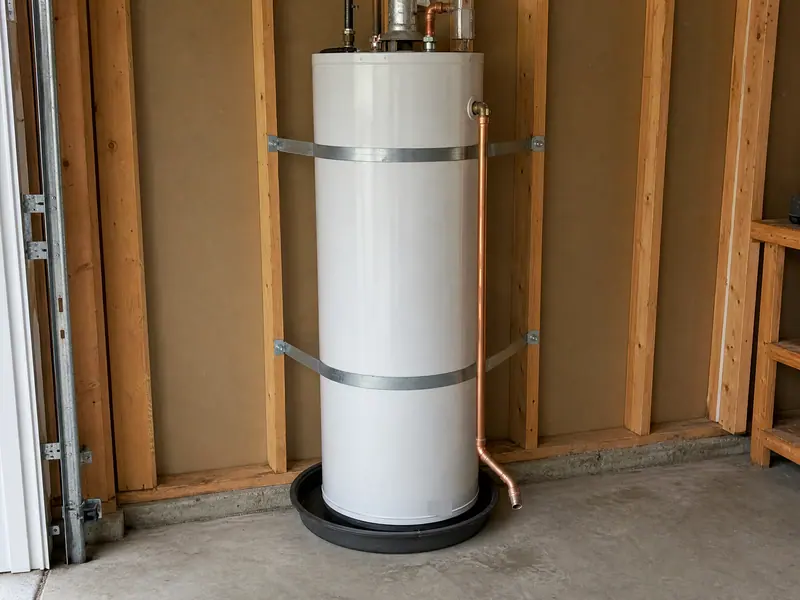
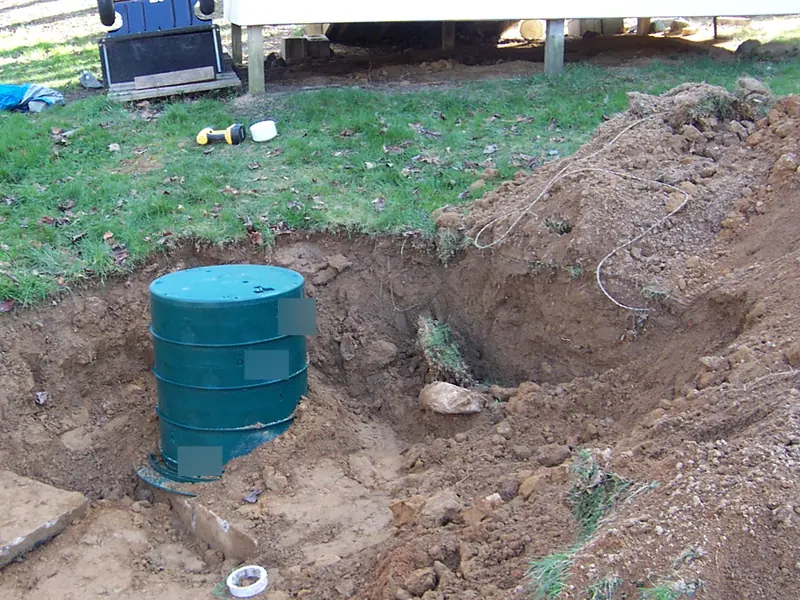
A well pump and pressure tank work as a pair: the pump fills the tank until a pressure switch cuts it off, and air in the tank pushes water to your taps until pressure drops and the pump restarts. If the pump clicks on and off every few seconds, a waterlogged tank is a common cause. In Washington, pump and tank work calls for a licensed pump installer, and wiring for a licensed electrician.
Street to Drainfield · updated · sources listed at the end

How do a well pump and pressure tank work together?
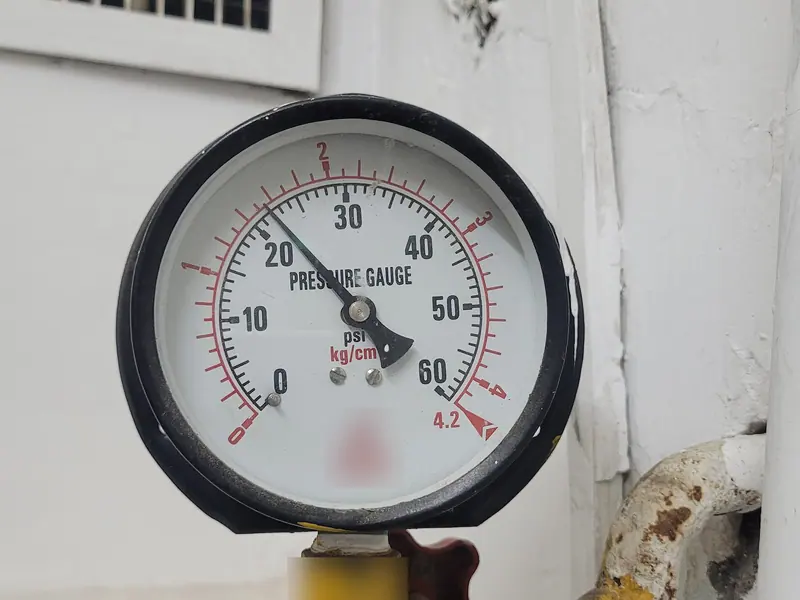
They take turns. DOH's Troubleshooting Bladder Pressure Tanks tech tip describes a four-step cycle: the tank is nearly empty and the air inside has expanded; the pump starts and water flows in, squeezing the air; the pump stops when pressure reaches the pressure switch's cut-off; then the squeezed air pushes water out as you use it, until pressure falls far enough for the pump to start again. DOH gives 30 to 50 and 40 to 60 psi as common ranges. A rubber bladder keeps the air and water apart.
What does a pressure tank actually do?
It protects the pump more than it stores water. DOH lists three jobs: keep pressure in a steady range, cut down how often the pump starts, and absorb water hammer. It also says bladder tanks "do not provide any actual useful water storage capacity," so a bigger tank is not a water reserve during a power cut. Frequent starts and stops wear equipment, and DOH notes that losing the air charge leads to excess pump cycling that may shorten the pump motor's life.
What are the signs of a waterlogged pressure tank?
DOH lists these:
- the pump motor cycles on and off rapidly
- tapping the tank sounds different from a tank with a proper air and water balance
- water, not air, comes out of the tank's air-charging valve
- stale, rusty water at the tap from corrosion inside the tank
When the bladder fails and water fills the air space, the tank is waterlogged. DOH says to replace waterlogged tanks, and notes replacement is often the most cost-efficient fix. It puts the average life of a bladder tank at 5 to 7 years.
Should you check or adjust the tank's air charge yourself?
No. Checking or adjusting the air charge is a job for a licensed pump installer. DOH's tech tip warns that tank condition, gauge accuracy and relief valves can make the job hazardous, tells owners to respect their limits, and says to hire a professional if unsure. It also warns that depressurizing a water system creates a high risk of backflow and contamination. The pressure switch sits on live wiring, so never open its cover or adjust it.
Who is licensed to work on a well pump in Washington?
A pump installer holding both plumbing and electrical licenses. L&I's combination plumber and electrician page says state law requires both licenses for pump and piping work on domestic water systems, and prohibits placing a pump in someone else's well, or doing the related electrical or plumbing work, without one. The Domestic Well certificate covers pumps up to 100 gallons per minute or 7.5 horsepower, single phase. Any new wiring to the pump is licensed electrical work.
What should you do after pump or tank work?
Test the water. The DOH and Ecology owner guide lists replacing or repairing any part of the well system as a reason for a coliform test, and the EPA says the same. Opening the system can let bacteria in; see coliform bacteria in well water and book through private well testing. If pressure is low but the pump seems fine, low water pressure covers other causes, and before a cold snap see frozen pipes in the crawlspace.
Yours to do
- Note how often the pump starts, and what the pressure gauge reads when it starts and stops.
- Keep the well house clear, dry and easy to reach.
- Know where the main water shutoff is.
- Book a coliform test after any pump or tank repair.
Leave to a licensed or certified pro
- Pump, pressure tank and pressure switch replacement by a licensed pump installer.
- Air charge checks or adjustments by a licensed pump installer.
- All pump wiring and circuits by a licensed electrician or licensed pump installer.
- Anything inside the well casing by a licensed well driller or pump installer.
On the record
- 5–7 yearsAverage life DOH gives for a bladder pressure tankWashington DOH
- 30–50 or 40–60 psiCommon pressure switch ranges DOH listsWashington DOH
- 7.5 hpPump size limit for the Domestic Well licenseWashington L&I
- 800 gallonsDaily pump output the county recommends for a two-home wellThurston County Environmental Health
| Symptom | Possible cause DOH names | Who to call |
|---|---|---|
| Pump clicks on and off rapidly | Waterlogged tank or low air charge | Licensed pump installer |
| Water spurts from the tank's air valve | Failed bladder | Licensed pump installer |
| Rusty, stale water at the tap | Corrosion inside the tank | Licensed pump installer, then a lab test |
A store to look at
A catalog of well pressure tanks, handy for seeing tank sizes and fittings before you talk to your pump installer, who should choose and install the replacement. The supply house is run by the same team as this site.
Common questions
Does a bigger pressure tank give me water in a power outage?
No. DOH says bladder tanks provide no useful storage, so plan drinking water for outages another way.
How much pressure should a two-home shared well deliver?
Thurston County recommends at least 20 psi at maximum demand to each property line or house, and a pump that can produce at least 800 gallons a day.
Is a pump replacement a job for a general plumber?
L&I says pump work on domestic water systems needs both a plumbing and an electrical license, so ask any contractor for both before work starts.
Why is my water cloudy right after the pump runs?
DOH's color and taste guidance says milky water is usually tiny air bubbles that clear from the bottom of a glass, and that on a well the pumping system may be the cause. A qualified contractor can check it.
Sources
- Troubleshooting Bladder Pressure Tanks, DOH 331-342 — pump cycle, pressure ranges, tank functions, waterlogged signs, 5–7 year life, safety and backflow warnings; read 6 November 2026
- Combination Plumber and Electrician, Washington L&I — both licenses required for pump work; Domestic Well limits; read 6 November 2026
- Drinking Water and Wells, Thurston County Environmental Health — two-home well pump and pressure recommendations; read 6 November 2026
- Private Wells: Information for Owners, DOH 331-349 — coliform test after repairs; read 6 November 2026
- Protect Your Home's Water, EPA — test after replacing or repairing well parts; read 6 November 2026
- Color, taste and odor problems in drinking water, DOH 331-286 — cloudy water from air; read 6 November 2026
How this page was put together. This page explains the pump and tank cycle from Washington DOH's tank tech tip, licensing from L&I and local recommendations from Thurston County, all read on 6 November 2026. It deliberately gives no steps for wiring, pressure switch adjustment or tank air charging, and it does not recommend tank brands or sizes; a licensed pump installer sizes the tank to the pump.
 Next at this stopWhat's causing the stains in your sinks?